Challenge 1: Documentation and ID Verification Hesitancy
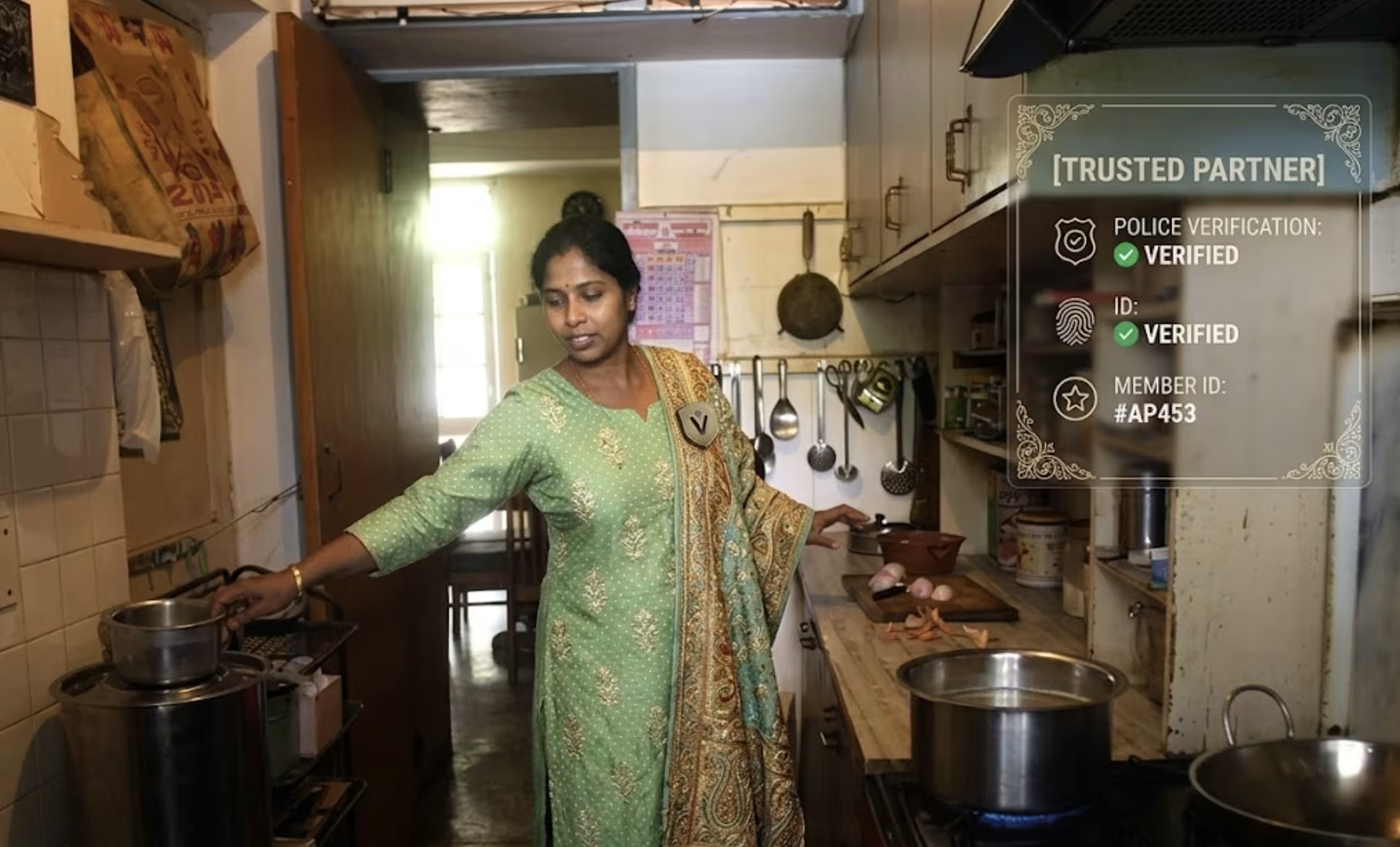
This is one of the first and most common hurdles. When asked for an Aadhaar card or any government ID before starting work, many domestic workers respond with visible hesitation — sometimes outright refusal.
This isn't unreasonable distrust without cause. Most domestic workers in India operate entirely within the informal economy, often without prior experience navigating documentation processes professionally. Some have encountered situations where sharing personal documents led to exploitation rather than protection. Fear, not stubbornness, usually sits underneath the refusal.
What actually helps: Explaining clearly and patiently why the ID is needed — for their own safety as much as the employing family's — makes a real difference. Framing it as "this protects you too, in case anything ever goes wrong on either side" lands very differently than simply demanding a document. Involving a trusted reference or community contact who can vouch for the process also reduces fear significantly.
Challenge 2: Paperwork and Written Agreements
Asking someone to read and sign a written agreement assumes a level of literacy that often isn't there. Many domestic workers, particularly women from rural or semi-urban backgrounds, have had limited formal schooling. A written contract, however well-intentioned, can feel intimidating or simply incomprehensible.
This is a widely documented gap in the sector — most domestic work arrangements in India happen without any formal written contract at all, which is part of why disputes and misunderstandings are so common industry-wide.
What actually helps: Verbal agreements, repeated clearly and confirmed through simple back-and-forth conversation, work better than a signed document nobody can fully read. Where possible, having a trusted family member or community elder present during the initial conversation adds a layer of comfort and mutual understanding.
Challenge 3: Safety and Mobility Constraints for Female Workers
This is one of the most important and most frequently overlooked constraints. Female domestic workers in Patna often cannot accept evening shifts that extend much past 7 or 8 PM. This isn't a lack of willingness to work — it's a legitimate safety concern.
Public transport availability drops sharply after early evening in many parts of the city. Autos become harder to find, buses run less frequently, and traveling alone after dark carries real risk. Asking a female worker to stay until 9 or 10 PM may mean asking her to walk or wait for transport in genuinely unsafe conditions.
What actually helps: Building shift timing expectations around this reality from the start, rather than treating it as a limitation to push back against. Families who need late evening help may need to specifically look for live-in arrangements or male help for those hours, rather than expecting a part-time female worker to extend into unsafe timing.
Challenge 4: Communication and Mobile Technology Gaps
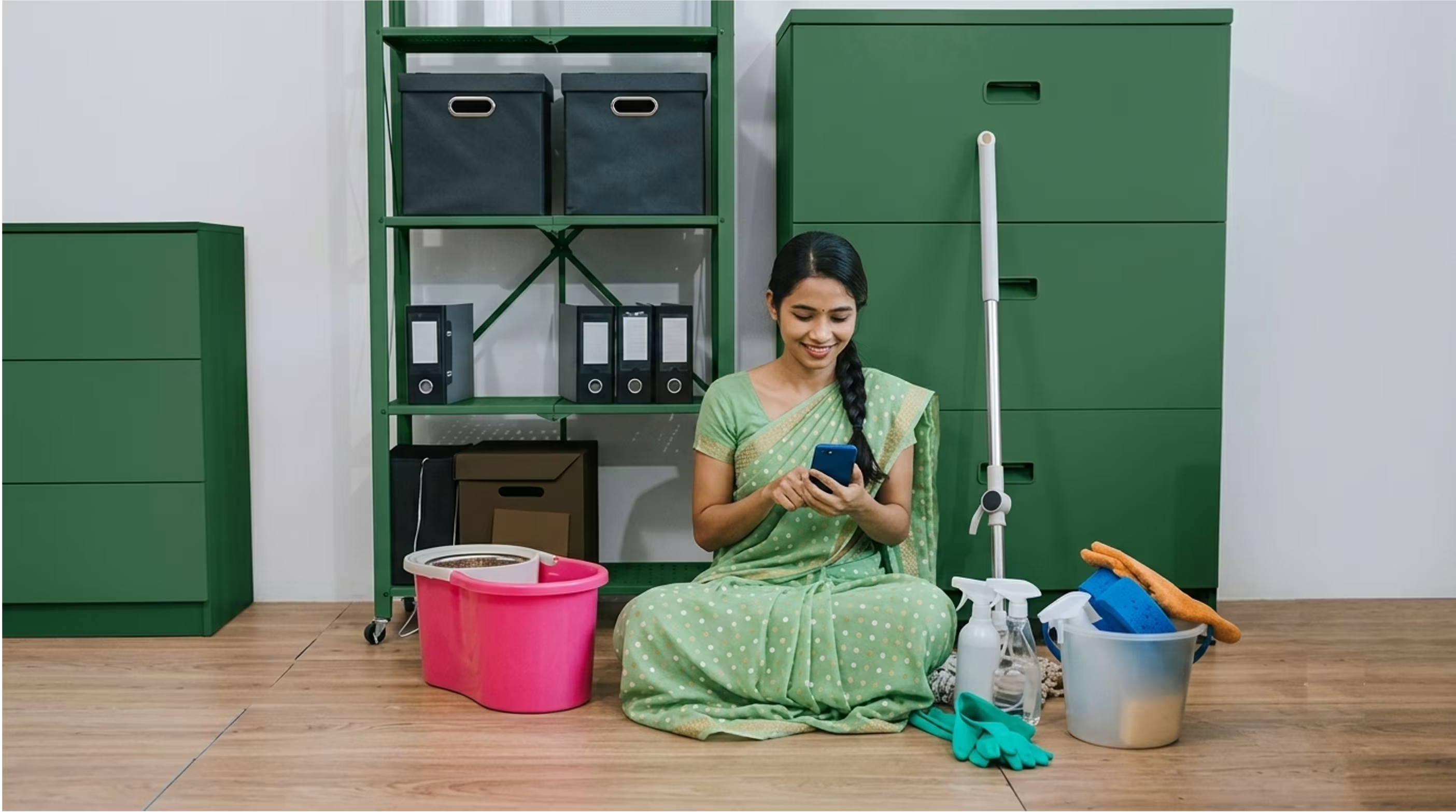
Many domestic workers are not deeply familiar with smartphone functionality beyond basic calling and WhatsApp voice notes. Typed messages with complex instructions, app-based scheduling, or anything requiring reading comprehension often doesn't land the way it's intended.
What actually helps: Voice messages instead of text. Simple, short spoken instructions repeated clearly rather than long written notes. Patience with repetition — assuming something needs to be said twice or three times in different ways is far more productive than assuming a single explanation was understood.
Challenge 5: High Turnover and Limited Loyalty to Tenure
It's common for a domestic helper to leave a position quickly if a slightly better-paying opportunity comes along, sometimes with little notice. This can feel frustrating after investing time in onboarding and building trust.
It's worth understanding why this happens rather than only viewing it as a lack of commitment. Domestic work in India remains almost entirely informal, with no structural job security, no severance, and minimal long-term benefit to staying in one position over another. When there's little institutional incentive to stay, and every household offers slightly different pay with no broader system rewarding tenure, it's rational for workers to move toward whatever pays marginally better in the moment.
What actually helps: One practical approach some families and agencies use is holding back a small portion of salary — commonly around 10 days' worth — paid out only once an agreed minimum period (such as one month) is completed. This isn't about control or punishment; when explained transparently upfront as a mutual-commitment step, it gives both sides a small, fair incentive to honor the arrangement, and the held amount is paid in full once the period is met. Transparency in how this is communicated matters enormously — done quietly or unfairly, it erodes trust instead of building it.
Challenge 6: General Distrust Toward Formal Processes
Beyond documentation specifically, there's often a broader hesitancy toward anything that feels official or institutional — agency involvement, structured onboarding, even something as simple as a printed form. This stems from a long history of the domestic work sector operating almost entirely outside formal protections, with limited awareness of labor rights or institutional support reaching this workforce.
What actually helps: Keeping every interaction warm, personal, and explained in plain language rather than bureaucratic. Avoiding anything that feels like a test or an interrogation. Building familiarity gradually rather than expecting full comfort with a formal process on day one.
Why We Approach This Differently at Don't Cook Don't Clean
These challenges are exactly why a one-size-fits-all, purely transactional approach to placement doesn't work well in this sector. At Don't Cook Don't Clean, we try to navigate each of these realities with patience rather than rigid process:
- •We explain verification clearly and repeatedly, in simple language, rather than demanding documents upfront without context
- •We respect safety-based timing constraints for female workers rather than pushing for shifts that compromise their wellbeing
- •We communicate primarily through voice and simple spoken instructions where literacy is a barrier
- •We are transparent about any salary structuring, including holdback arrangements, explaining the reasoning clearly to both the worker and the hiring family
- •We build relationships over time rather than expecting instant formal trust None of this makes the process perfectly smooth — this remains a genuinely complex, human sector to work in. But approaching it with realistic expectations and genuine patience, rather than frustration, leads to far better outcomes for families and workers alike.
If you're looking to hire a maid, cook, or household helper in Patna and want a service that understands these realities rather than ignoring them, submit your requirement here and we'll respond within 24 hours.
You can also call or WhatsApp us directly at +91-88771-94682.